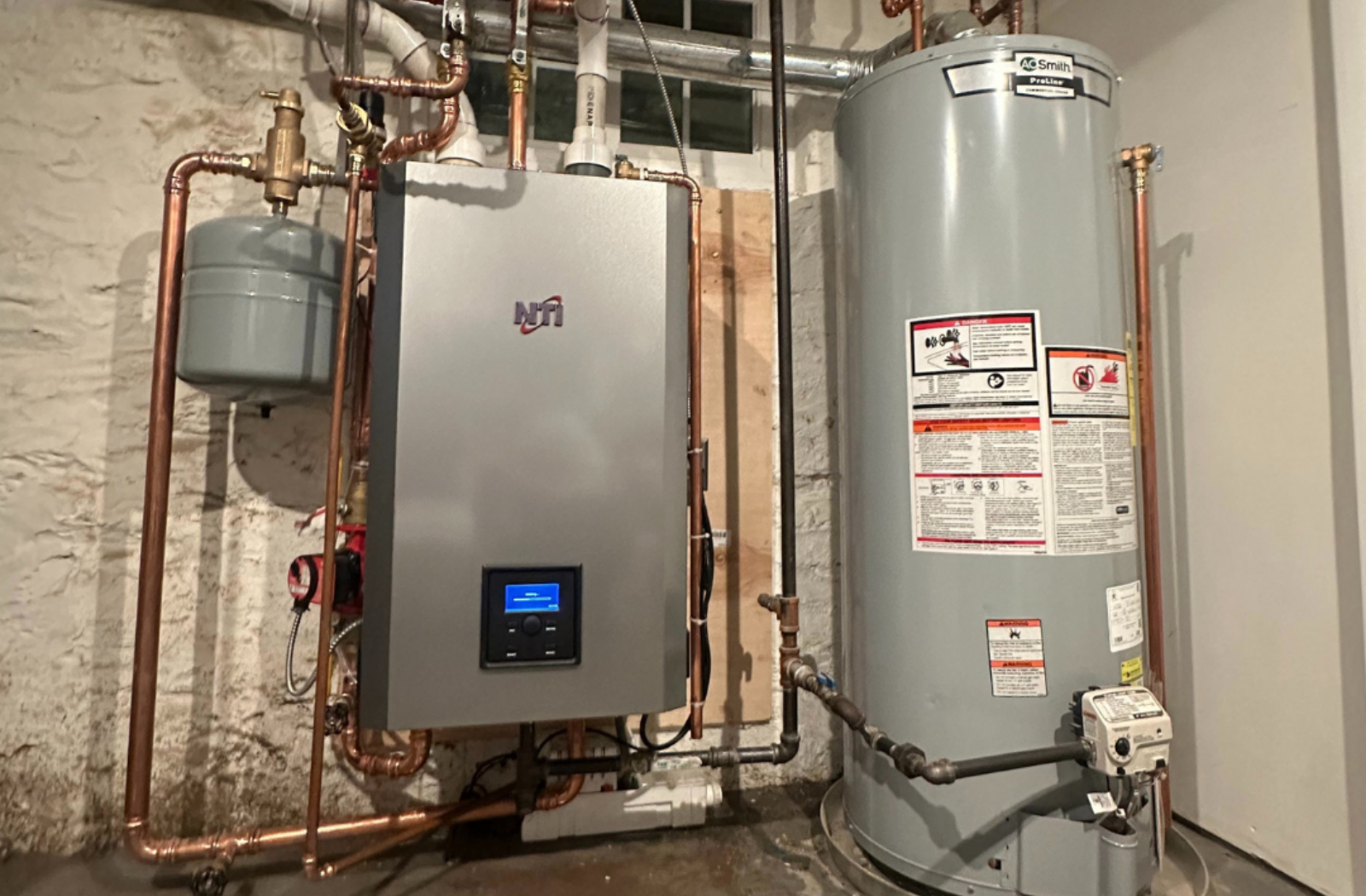
If your furnace is pushing 40 years old and starting to act up, you are probably wondering whether furnace repair will solve the problem or if it is finally time for a full furnace replacement. This is a common situation for homeowners, especially when colder weather arrives and your heating system has to work harder than it has in months.
Recently, we spoke with a homeowner who had a 40-year-old furnace and was unsure whether it could be repaired or if replacement was the smarter investment. That question comes up often, and the answer depends on several important factors.
Most furnaces are designed to last between 15 and 20 years with proper maintenance. According to the U.S. Department of Energy, heating equipment typically has a service life of about 15 to 30 years depending on the type and upkeep of the system. However, once a furnace passes the 20-year mark, efficiency declines and the likelihood of breakdowns increases significantly.
At 40 years old, a furnace is well beyond its expected lifespan. Even if it is still running, it is operating on borrowed time.
In most cases, repairing a 40-year-old furnace is not the most cost-effective decision. Here is why.
1. Efficiency Is Dramatically Lower
Older furnaces often have efficiency ratings of 60 to 70 percent AFUE. Modern high-efficiency furnaces can reach 90 to 98 percent AFUE, meaning they convert far more fuel into usable heat. The difference can significantly reduce your monthly heating bills.
Even if you repair an old furnace, you are still left with outdated technology and higher operating costs.
2. Replacement Parts May Be Hard to Find
When a furnace reaches 30 or 40 years old, replacement parts may be discontinued. That can make repairs more expensive or even impossible in some cases.
3. Increased Risk of Major Failure
As systems age, components such as heat exchangers, blower motors, and control boards are more likely to fail. A cracked heat exchanger in particular can be a serious safety concern because it may allow carbon monoxide to leak into the home.
According to the Consumer Product Safety Commission, carbon monoxide is responsible for hundreds of deaths and thousands of emergency room visits annually in the United States. Older furnaces carry a higher risk of combustion-related issues.
Here are the most common signs it may be time to replace rather than repair:
- Furnace is over 20 years old
- Frequent or costly repairs
- Uneven heating throughout the home
- Rising energy bills
- Strange noises or smells
- Yellow pilot light instead of blue
- Visible rust or corrosion
If your furnace is 40 years old and experiencing any of these issues, replacement is typically the smarter long-term decision.
If you decide to replace your furnace, you have several options depending on your home and comfort goals.
Standard Efficiency Gas Furnaces. These systems typically offer 80 percent AFUE and are more affordable upfront. They are commonly installed in homes with existing venting systems.
High-Efficiency Gas Furnaces. These units offer 90 percent AFUE or higher and use advanced venting systems. They reduce fuel usage and provide long-term energy savings.
Electric Furnaces. Electric furnaces can be a good option in homes without natural gas access. They generally have lower upfront installation costs but may have higher operating costs depending on local electricity rates.
Heat Pump Systems. In some cases, homeowners consider upgrading to a heat pump system instead of replacing with another furnace. Heat pumps provide both heating and cooling and can be highly efficient in moderate climates.
We always recommend evaluating your home’s size, insulation, ductwork condition, and energy goals before choosing a system.
It can be, but safety risks increase with age. Regular inspections are critical. Older systems are more prone to combustion-related issues, especially if maintenance has been inconsistent.
Yes. Replacing a 60 percent efficient furnace with a 95 percent efficient unit can dramatically reduce fuel consumption. The Department of Energy notes that upgrading to high-efficiency heating equipment can significantly reduce annual energy costs.
A well-maintained modern furnace typically lasts 15 to 20 years. Investing in routine annual maintenance helps extend its life and maintain efficiency.
When a furnace reaches 40 years old, replacement is usually the smarter investment. A small repair might get it running again, but it will not fix efficiency problems, safety concerns, or prevent future breakdowns.
At B.L. James & Son, we help homeowners in Ashburn, VA decide what makes the most sense for their heating system. We can inspect your furnace and clearly explain your repair and replacement options so you can make a confident decision for your home’s comfort and safety.
If you are unsure whether to repair or replace your furnace, schedule an inspection with our team today. We are here to help you find the right solution for your home.
The B.L. James & Son team likes to move quick and reply to customer inquiries the same business day. Once we troubleshoot the issue, estimates are provided the same day or by the end of the next day. Our work begins the moment you call, and since we’re open 24 hours a day there’s no reason to wait. Call B.L. James & Son anytime, we’ll be there to help.

Email has an ability many channels don’t:
creating valuable, personal touches – at scale

B.L. James & Son Is a veteran-owned mechanical contractor providing plumbing, heating and cooling services to residents and business in Arlington, Virginia and the surrounding community.





.png)

